A congress is not one event. It is a keynote, six parallel sessions, a sponsor floor, two coffee breaks, a networking evening and a hundred delegates who all need to be recognisable in the recap. Conference photography in Berlin is planned around that structure, not improvised on the day.
What conference coverage has to deliver
Communications teams rarely need “nice photos”. They need a set of images that fills specific slots: the press release, the LinkedIn recap, next year’s sales deck, the sponsor report and the speaker’s own portfolio. Every congress is shot against that list.
Stage & keynote
Each speaker photographed clean against the screen, mid-gesture, with the branding readable behind them — wide, medium and tight for every talk.
Audience & room
Full-house frames from the back, engaged faces from the side, Q&A microphones. The images that prove attendance to sponsors and to next year’s exhibitors.
Breakouts & panels
Parallel sessions covered on a rotation agreed beforehand, so no track ends the day without usable pictures.
Sponsors & exhibitors
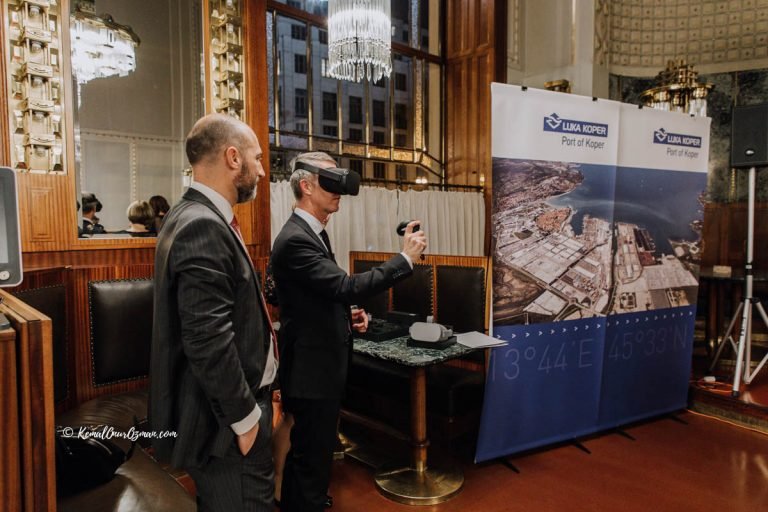
Every logo wall, roll-up and stand photographed with people in front of it — that is what sponsors are actually paying for in the follow-up report.
Breaks & networking
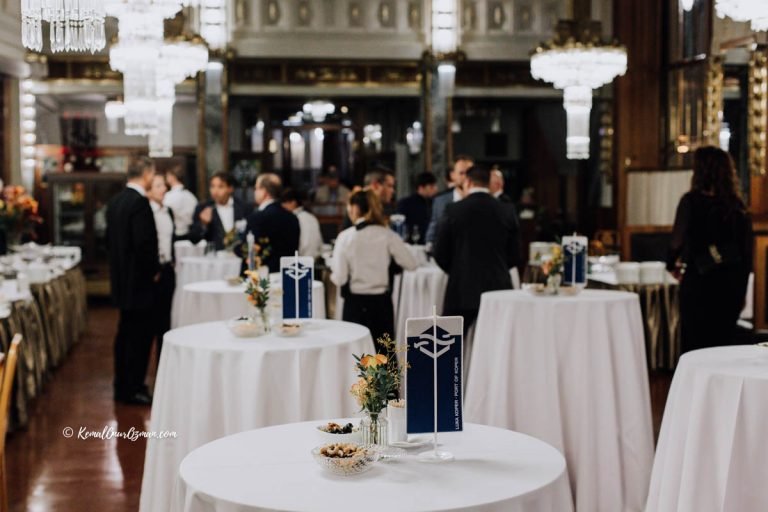
Coffee, catering, conversations and the hallway track. Warm, candid, no one staring down a lens.
Speaker portraits
Ten-minute portrait slots between sessions, so speakers leave with a usable headshot as well as stage shots.
Berlin congress venues, and what each one does to your pictures
Berlin’s congress spaces are technically very different from one another, and the differences show up in the photographs long before anyone edits them.
- CityCube and the Messe Berlin halls — huge volumes, heavy stage wash, LED walls that blow out if exposure is set for faces. Shot for the screen first, faces lifted afterwards.
- bcc Berliner Congress Center — the round main hall is beautiful and unforgiving: steep angles, dark surroundings, one clean position for the wide house shot.
- Estrel Congress Center — large plenaries with mixed tungsten and LED sources; white balance has to be handled per room, not per event.
- STATION Berlin and Kraftwerk — industrial halls with almost no ambient light. Fast glass and restrained on-camera fill, never a bare flash into a dark hall.
- Hotel ballrooms in Mitte — warm, low, chandelier-lit rooms where flash destroys the atmosphere. These are shot available-light wherever the ISO allows.
- Radialsystem, Umspannwerk, Tempelhof hangars — daylight halls where the light changes by three stops between morning and afternoon sessions.
Practical note: most Berlin congress venues need a photographer’s name on the accreditation list and, for anything on a rigged stage, a short briefing with the AV crew. Send the venue and the run-of-show with your enquiry and that is handled before the day.
Same-day images, while the event is still news
A conference recap posted three days late is an archive entry. A gallery of twenty-five edited frames delivered during the closing session is content your team can publish while delegates are still in the building.
For congresses this normally works as a rolling delivery: a first selection after the opening keynote, a second before the evening programme, and the full edit afterwards. Nothing about it is automatic — it is agreed in advance and priced in, because it means editing on site between sessions.
Multi-day congresses and second photographers
Two parallel tracks cannot be covered by one photographer without something being missed. For programmes with simultaneous sessions, an evening dinner and a morning press call, coverage is quoted as either a longer single-photographer day with an agreed rotation, or a two-photographer team with one on stage and one on the floor. Both are honest options; the quote says which one your programme actually needs.
Consent, DSGVO and what you can publish
Photographing delegates in Germany is routine, but it is not lawless. What works in practice at Berlin congresses:
- Photography notice in the registration email and on signage at the entrance.
- A visible opt-out marker — a different lanyard colour or a sticker — so people who do not want to appear can be respected without a conversation in the middle of a session.
- Speakers and stage participants covered by their speaker agreement.
- Close-up portraits of individual guests taken with a nod or a word, not from behind a long lens.
The delivered gallery is yours to publish. Usage is granted for your own marketing, press and internal channels, with no per-image fees added afterwards; onward licensing to sponsors or media partners is agreed in writing when you need it.
Deliverables and turnaround
| Same-day selection | 20–40 edited frames, web-sized, delivered during or straight after the event on request |
|---|---|
| Full gallery | Colour-corrected, high-resolution JPEGs in a private online gallery, typically within 3–5 working days for a one-day conference |
| Formats | Full-resolution files for print plus web-optimised versions; 16:9 and square crops for social on request |
| Organisation | Gallery split by session, speaker and day so your team can find an image without scrolling through 900 files |
| Archive | Files kept for twelve months, so you can come back for the annual report |
What drives the price
Conference photography is quoted per event, as a fixed all-in figure. Four things move it: the number of coverage hours, whether a same-day edit is needed, whether one photographer or two are required for parallel tracks, and whether portraits or a headshot corner are added. Travel inside Berlin and Brandenburg is included; anything further is billed at cost, never marked up.
Send the date, the venue, the run-of-show and what you need the pictures for, and you get availability and a fixed price within 24 hours. See event photography prices in Berlin for how the figures are built up.
Questions organisers ask
Can you work without flash?
Yes, and for keynotes and panels that is the default. Flash is used only where the room genuinely has no light — industrial halls, evening receptions — and then bounced, never fired at guests.
Do you need to be on the AV briefing?
A five-minute conversation with the AV lead before doors open is enough: where the photographer can stand, when the lighting states change, and whether there are cues that must not be walked through.
How many images come out of a conference day?
For a full day, expect 300–600 edited images depending on the programme density. The gallery is curated, not dumped — near-duplicates and half-blinks are removed before you see it.
Can you also cover the evening dinner?
Yes. Evening programmes, awards and dinners are usually the strongest images of the whole congress, and they are quoted as part of the same day rather than as a separate booking.
Photographing a conference in Berlin?
Send the date, venue and programme. You get availability and a fixed, all-in price within 24 hours.